
SIR Boundary: Myth vs Reality in Real Estate
First understand what SIR boundary is – SIR is an international act not an actual boundary, which can restrict the development. It is designed to give global companies a sense of security and protection so that they can invest more confidently. But let’s understand one thing very clearly — this boundary is completely artificial.
At some point on the Dholera map, a line had to be drawn to define the SIR region. That’s all it is — a planned demarcation.
But what investors have done is draw that same line in their minds. They have started believing that anything outside this boundary is not worth investing in, and that no development will happen beyond it.
This boundary is not meant for Indian investors — it is designed only for international global companies. It has no real impact on us.
Now let me ask you something.
Where you live today — whether it’s in Delhi or Mumbai — do you only get facilities like water, electricity, and infrastructure because you are inside some special boundary? Of course not.
The government provides these basic developments to residents everywhere. So why do we assume that development will only happen inside the SIR boundary?
You need to understand this — development is not restricted to a line.
Whatever essential facilities you expect in a city will be fulfilled across the region, not just within SIR.
Keep your vision clear. Your requirements — whether it’s infrastructure, connectivity, or livability — will be met equally outside the SIR boundary as well.
Think about it logically. If an artificial lake is being developed, does the water stop exactly at the boundary line? No — the source lies beyond it.
Similarly, if the goal is to maintain zero pollution inside SIR, does that mean all traffic and pollution will be pushed outside the boundary? That’s not practical. The system works as a whole.
So don’t limit your thinking to an artificial line on a map.
Real development doesn’t stop at boundaries — it expands beyond them.
In the world of real estate investment, especially in emerging smart cities and industrial corridors, one of the most commonly misunderstood concepts is the SIR boundary. Many investors hesitate, delay decisions, or even miss golden opportunities simply because they are trapped in the myth surrounding this term.
However, the problem begins when people start treating this boundary as a rigid “line of safety” — believing that only properties inside it hold value and anything outside is risky or worthless.
In reality, development does not follow lines on paper — it follows infrastructure, connectivity, demand, and economic activity.
History has shown that:
Areas just outside planned zones often grow faster due to lower entry cost.
Early investors in nearby regions often enjoy higher returns.
Infrastructure like highways, expressways, and industrial corridors impact surrounding areas — not just the marked boundary.
Why This Myth Exists
This misconception is often created due to:
Half knowledge of planning maps
Misleading marketing by some sellers
Fear-based selling tactics
Lack of long-term vision
People are made to believe that stepping outside the SIR boundary is risky — when in fact, smart investors look beyond it.
What Actually Drives Land Value?
Instead of blindly following the DIR boundary, focus on real growth factors:
Proximity to highways and expressways
Connectivity to industrial hubs
Government infrastructure projects
Population movement and job creation
Future expansion direction of the city
These are the real indicators of appreciation.
Smart Investor Mindset
A smart investor doesn’t ask:
“Is it inside SIR?”
They ask:
“Is development moving towards this area?”
Development belongs to Dholera but build outside the SIR
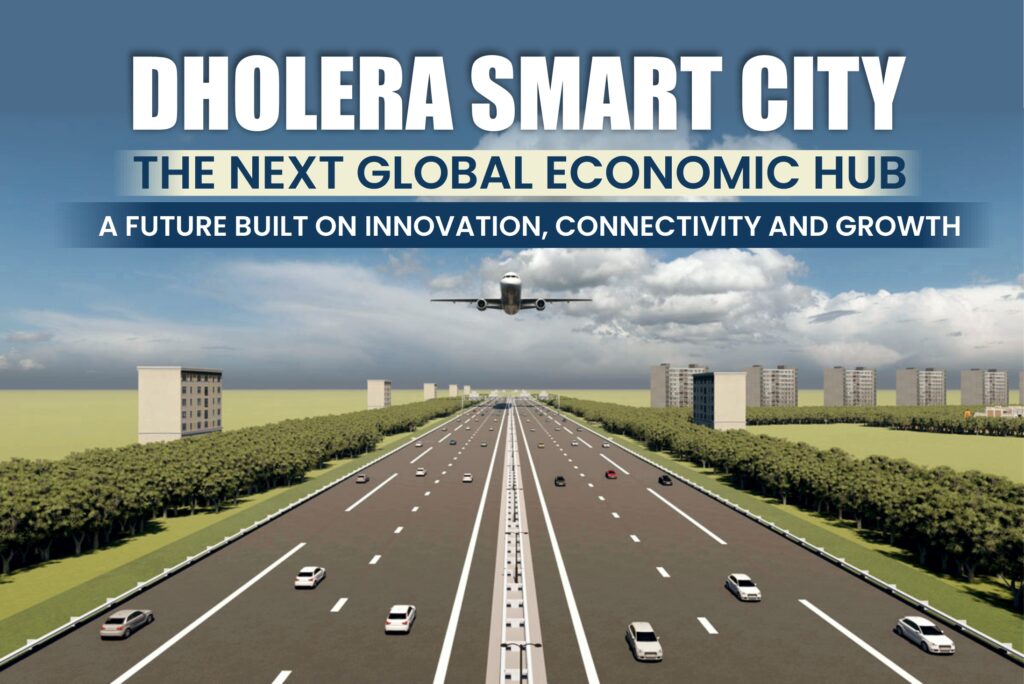
International Airport
Bhimnath Railway Junction
Meritime Museum
AJU Hotels
Blackbuck Century
Conclusion
It’s time to break free from the myth of the SIR boundary.
Opportunities don’t lie within drawn lines — they lie where vision meets development.
If you limit your thinking to boundaries, you limit your returns.
Think beyond the map. Invest beyond the boundary. Grow beyond expectations.